
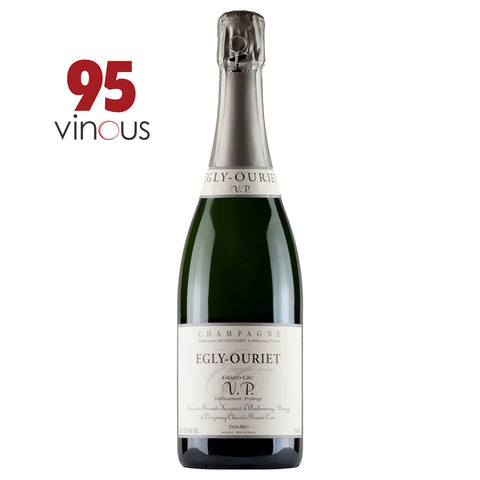
Champagne Egly-Ouriet 'VP' Grand Cru NV Magnum
Free Delivery from any $1,500 order. Cut-off at 3pm for next day delivery!
Sparkling

NV

Champagne

Champagne

Pinot Noir

Biodynamic
Tasting Notes & Ratings
Grape
70% Pinot Noir and 30% Chardonnay; Ambonnay Rouge for color (about 5% of the blend)
Type of Champagne
Extra-Brut
Dosage
3g/L
Disgorgement
July 2021
Tasting notes
Pale yellow. Aromas of spiced pears, yellow peaches, baking spices, warm oatmeal. Precise, spicy, vinous; flavors of ginger, red apple, citrus fruits, toast.
The V.P. stands for Vieillissement Prolongé (prolonged ageing), as the wine spends so long on lees--in this case 84 months. It's a blend of 70% Pinot Noir and 30% Chardonnay, with fruit from Ambonnay, Bouzy and Verzenay--all great Grand Cru terroirs. Vinification and élevage was in oak casks, with the dosage a tiny 2g/L, seriously Extra Brut.
The power of the fruit plus the extended lees ageing grants such harmony, so much length and so much complexity and texture, that the dosage seems irrelevant. It's a vinous, powerful and super-pure Champagne of great depth and class. Intense and statuesque, yet with so much finesse as well. After resting seven years in bottle in the Egly-Ouriet cellars, this is now singing.
Expert Ratings
Wine Advocate 94/100 - Vinous 95/100
More About The Winery
Founded in Ambonnay, Champagne Egly-Ouriet has become one of the most celebrated grower-Champagnes of our time. When Francis Egly took over the family estate in 1982, he shifted from selling grapes to négociants to producing wines that today rank among the benchmarks of the Champagne winemaking movement, often mentioned alongside pioneers like Anselme Selosse.
Egly-Ouriet farms 12 hectares, mostly Grand Cru vineyards in Ambonnay, with additional holdings in Bouzy, Verzenay, and Vrigny. The vineyards are planted to 70% Pinot Noir, 30% Chardonnay, and a small parcel of Pinot Meunier, with some vines dating back to 1947. Francis Egly’s philosophy is rooted in meticulous vineyard work, late harvesting for ripe fruit, and minimal intervention in the cellar.
Base wines are vinified in seasoned Burgundy oak barrels, fermented with indigenous yeasts, and bottled unfined and unfiltered. Extended lees ageing is a hallmark of the domaine: Brut Tradition and Vignes de Vrigny spend a minimum of 3 years sur lattes, while other cuvées rest far longer, gaining depth, complexity, and ageing potential. Recently, cellar temperature control has further reduced the need for sulfur additions.
Beyond its acclaimed Champagnes, Egly-Ouriet also produces some of the most coveted still Coteaux Champenois Pinot Noirs—Burgundian in stature, profound in character, and made in very limited quantities.
Today, Champagne Egly-Ouriet is sought worldwide by collectors, sommeliers, and enthusiasts for wines that combine power, structure, terroir expression, and longevity.